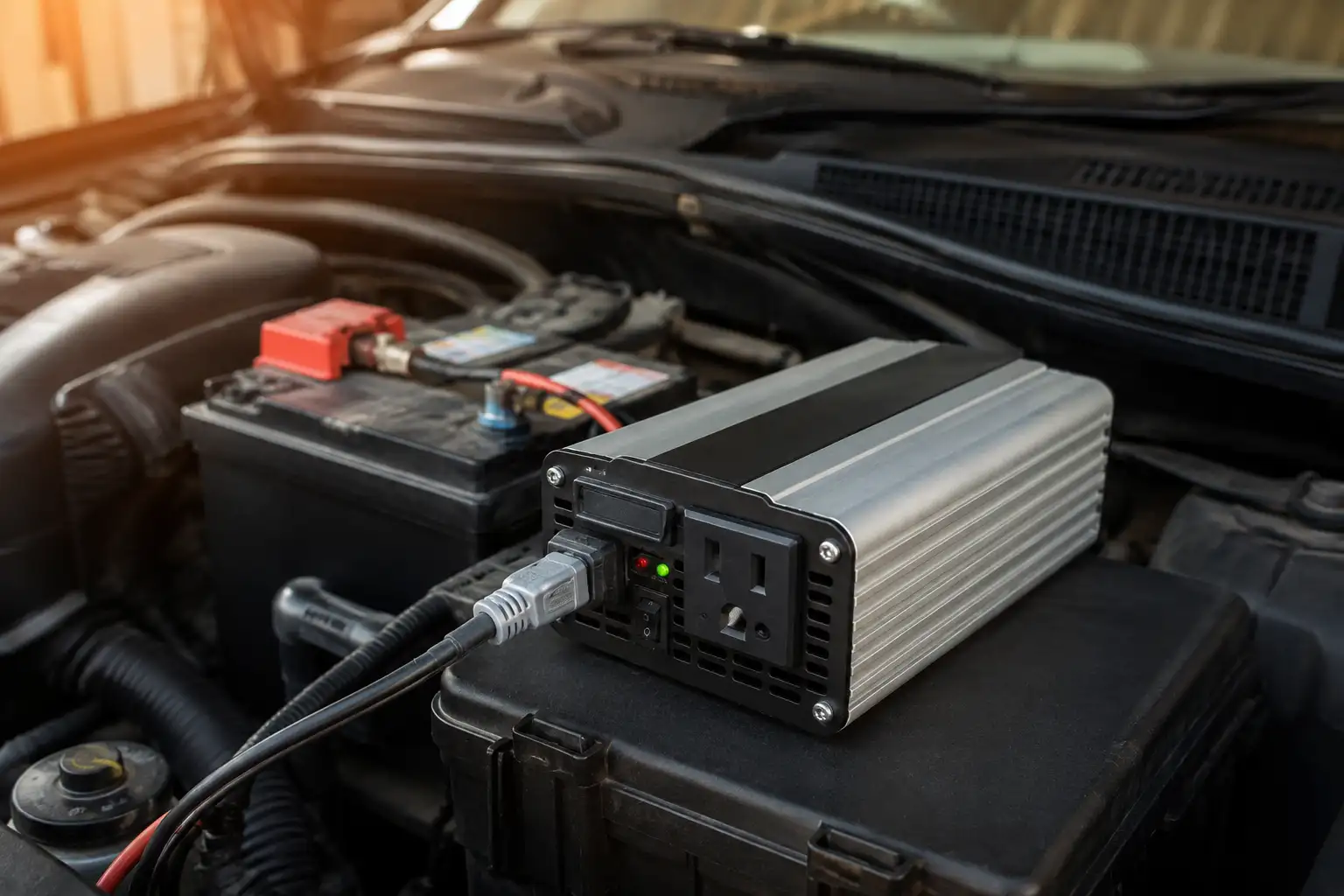
Yes, a car battery inverter left plugged in can slowly drain your battery even while parked, since it continues drawing power in standby mode. Unplugging it when the car isn’t running is the simplest way to prevent this.
A customer once called me after finding his car completely dead in the morning. He had parked it normally the previous evening and assumed the battery had suddenly failed. During the inspection, we found the real reason: a power inverter had been left connected while the car was parked. Situations like this are quite common, which is why drivers looking for Car Battery Replacement in Dubai should first understand what caused the battery to discharge instead of immediately assuming the battery itself is faulty.
How Does a Car Battery Inverter Use Power?
An inverter converts the battery’s 12-volt DC electricity into AC power that can be used by devices such as laptops, chargers, small appliances, or other equipment.
The important thing to remember is that an inverter does not create electricity. It takes energy from your car battery and converts it into another form.
Even when nothing is plugged into the inverter, some models continue using a small amount of electricity simply because their internal electronics remain active. Once you connect an appliance, the demand becomes much greater.
That is why leaving an inverter switched on overnight can leave you with a battery that no longer has enough power to start the engine.
Why Is the Risk Higher When the Car Is Parked?
When your engine is running, the alternator supplies electrical power and helps recharge the battery. When the engine is switched off, however, the alternator is no longer providing that charging support.
This is where many drivers get confused about car battery vs alternator. The battery stores electrical energy and starts the vehicle, while the alternator recharges it once the engine’s running. That difference also explains why your car battery drains overnight, a battery issue on its own, not something the alternator can fix while the car’s parked.
So if your car is parked with the engine off, an inverter is taking energy from the battery without the alternator replacing it.
How Quickly Can an Inverter Drain a Battery?
There is no single answer because the drain depends on the inverter, the battery’s condition, and what you are powering.
For example, a small charger places a much lighter load on the battery than a high-powered appliance. Inverter efficiency also matters because some energy is lost as heat during the conversion process.
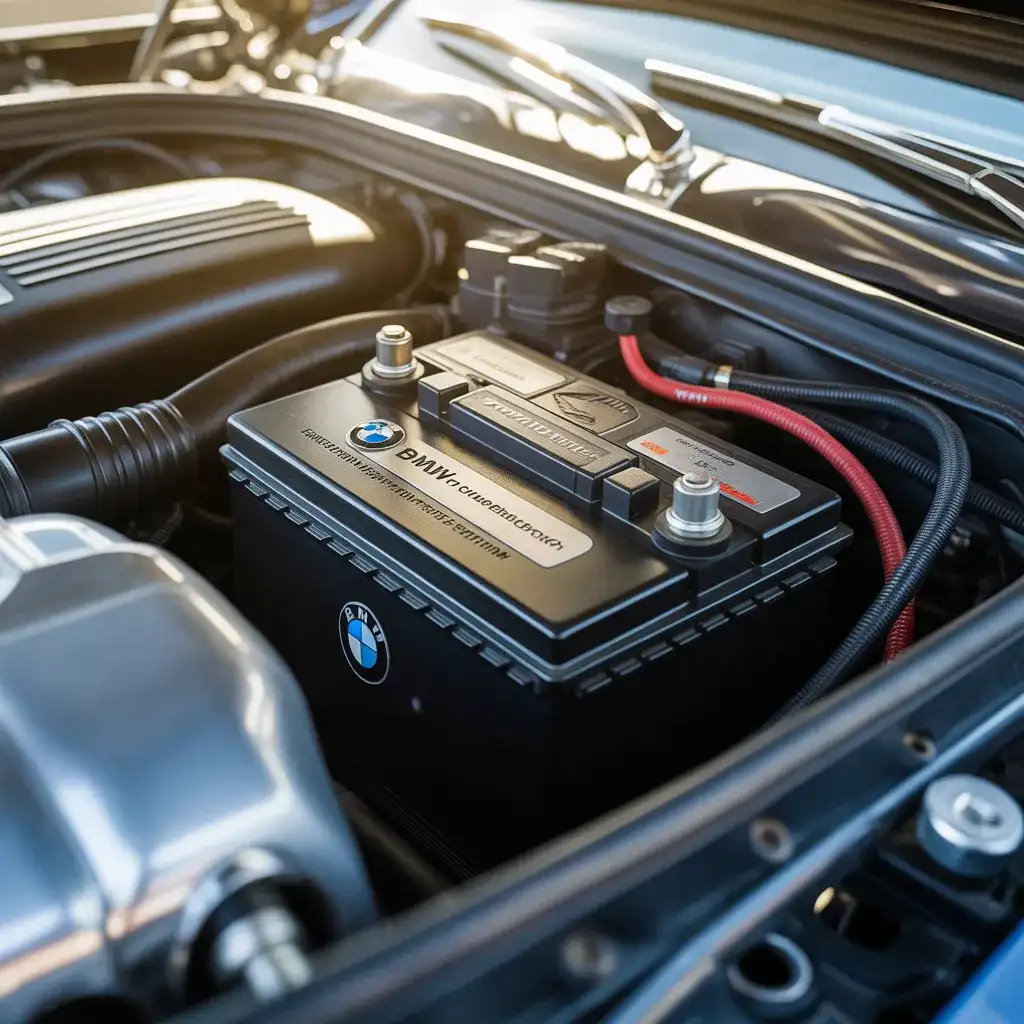
Battery capacity matters too. A 55 amp car battery can provide a different amount of usable energy compared with a larger-capacity battery, but its rating should never be treated as permission to run an inverter until the battery is completely empty.
A vehicle battery is primarily designed to deliver a strong burst of power for starting the engine. It is not intended to be repeatedly deeply discharged like a dedicated deep-cycle battery.
What If You Have a 90Ah Battery?
Drivers sometimes assume that a larger battery makes an inverter completely safe to leave running.
A 90ah car battery has more capacity than a smaller battery, so under the same conditions it can generally supply a load for longer. But it can still be discharged if an inverter is left running for an extended period.
Battery age and condition also make a noticeable difference. An older battery that already has reduced capacity may struggle much sooner than a healthy newer one.
This is why I always recommend looking at the complete electrical setup rather than judging the battery by its Ah rating alone.
Does the Inverter Drain the Battery Even Without a Device?
Yes, potentially.
Many inverters have an idle or standby power draw. The amount varies by model, but the inverter may continue consuming electricity while switched on even when there is no appliance connected.
It may not kill a healthy battery immediately, but leaving it connected for many hours or days can gradually reduce the available charge.
If you are not using the inverter, the safest habit is simple: switch it off and disconnect it when appropriate.
Could an Old Battery Make the Problem Worse?
Absolutely.
Suppose you regularly use an inverter, but the battery is already several years old. The battery may have lost part of its original capacity, making it much easier to discharge.
This is also why replacing the battery without checking the charging system can sometimes lead to the same problem again.
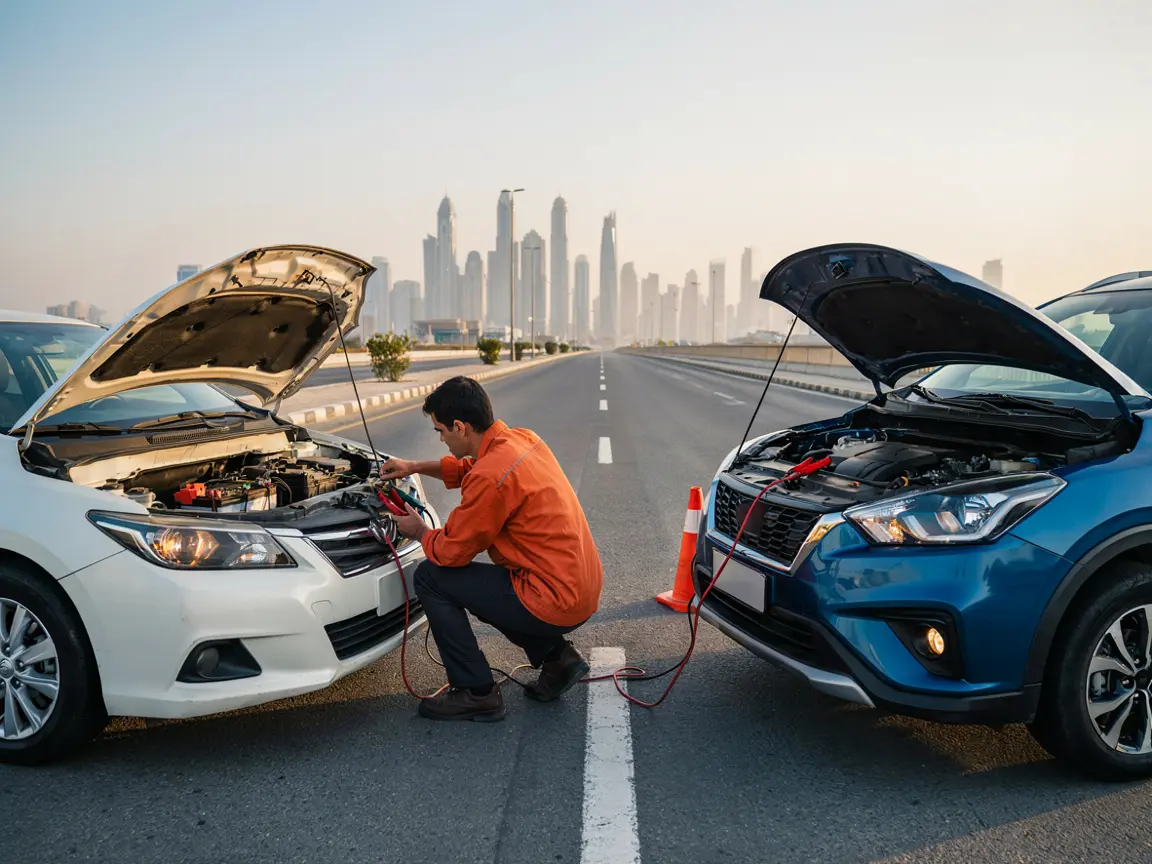
If a vehicle repeatedly needs a jump-start after being parked, I would check the battery condition, charging system, and possible parasitic electrical loads before recommending a replacement.
What About Inverter Use While Driving?
Using an inverter while driving is generally different because the alternator is operating and supplying electrical power. However, that does not mean every inverter and appliance combination is automatically safe.
A high electrical load can put additional demand on the vehicle’s charging system. The inverter should be properly rated, correctly connected, and used within the vehicle manufacturer’s electrical limits.
For high-power applications, professional installation is a much better option than relying on an improvised connection.
How Can You Prevent Battery Drain?
A few simple habits can save you from discovering a dead car in the morning:
- Turn the inverter off whenever you leave the vehicle.
- Disconnect it if it is not required.
- Avoid running high-power appliances from a starting battery with the engine off.
- Check your battery condition if it repeatedly loses charge.
- Have the alternator and charging system tested when battery problems keep returning.
- Use an inverter with appropriate low-voltage protection where available.
These steps are especially useful in Dubai, where high temperatures can already place additional stress on automotive batteries.
Final Thoughts
A car battery inverter can definitely drain your battery while parked because it continues drawing electrical energy when the engine is off. The bigger the electrical load and the longer the inverter runs, the faster the battery can lose its charge.
If your battery dies repeatedly, don’t automatically blame the battery. An inverter, another accessory, a parasitic electrical drain, or a charging-system problem could be responsible. Proper diagnosis can save you from replacing a perfectly usable battery.
FAQs
Can leaving an inverter plugged into my car drain the battery?
Yes. An inverter can draw power even when no appliance is connected, depending on its design. Leaving it switched on for long periods can gradually discharge the battery.
Can an inverter drain a car battery overnight?
Yes, especially if it is powering an appliance or has a significant standby draw. The exact time depends on the battery capacity, battery condition, inverter efficiency, and electrical load.
Is a 90Ah battery better for running an inverter?
A 90ah car battery provides greater capacity than many smaller automotive batteries, but it can still be discharged by an inverter. A starting battery should not routinely be used for deep-discharge applications.
Can a weak alternator cause battery problems?
Yes. If the alternator is not charging the battery properly while the engine is running, the battery can gradually lose charge and eventually fail to start the vehicle.
Should I replace my battery if an inverter drained it?
Not necessarily. A single discharge does not automatically mean the battery needs replacement. Test the battery and charging system first. If the battery has lost significant capacity or cannot hold a charge, replacement may then be appropriate.