Quick Answer: Yes, you can safely charge a car battery while it is still installed in the car. With a modern smart charger you usually do not need to disconnect the terminals. Just connect positive first, charge in a ventilated spot, and avoid overcharging. The only times you should disconnect are with older manual chargers or when jump-starting is done wrong.
A dead battery always seems to strike at the worst moment before work, mid-errand, or on a trip out to Hatta. The good news: in most cases you can recharge the battery without pulling it out of the car. After years of doing this on Dubai driveways and in workshop bays, I’ll walk you through the safe methods, how long each takes, and the UAE-specific traps most guides skip. And if your battery is truly finished, I’ll show you how to spot that so you can arrange a quick car battery replacement in Dubai instead of wasting an hour charging a battery that’s already dead.
Do You Need to Disconnect the Battery First?
This is the question I get most, so let’s settle it before the methods.
- Smart / automatic charger: No need to disconnect. These chargers regulate voltage and won’t spike your car’s electronics. Leaving the battery connected also keeps your radio presets, clock, and ECU settings intact.
- Old manual / unregulated charger: Safer to disconnect the negative terminal first, because a fixed high output can damage sensitive modules.
- Modern car with start-stop or many electronics: Keep it connected and use a smart charger; disconnecting can trigger fault codes and force a re-registration of the battery.
Rule of thumb: smart charger = leave it in and connected. When in doubt, check your owner’s manual or call a professional.
5 Safe Ways to Charge a Car Battery in the Car
1. Use a Smart Battery Charger
A smart battery charger is one of the safest and most efficient tools to charge a car battery in a car. It automatically adjusts the voltage and stops charging once the battery is full, preventing overcharging.
How to do it:
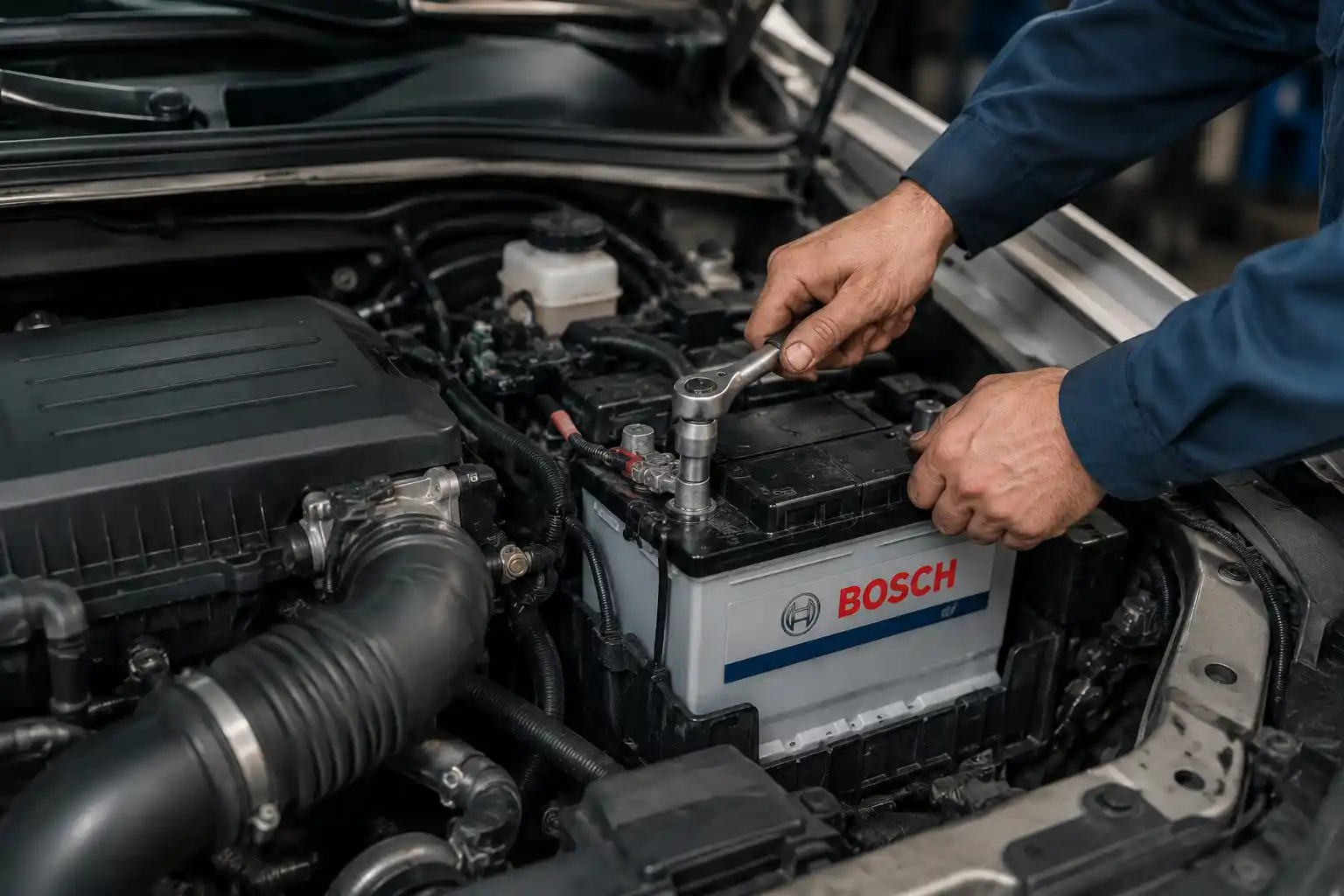
- Connect the red (positive) cable to the battery’s positive terminal.
- Attach the black cable to the negative terminal.
- Plug in the charger and let it work automatically.
Smart chargers are perfect for long-term battery maintenance and are ideal for modern vehicles with sensitive electronics.
2. Try a Portable Jump Starter
A portable jump starter is a lifesaver when your car refuses to start.
- Unlike traditional jumper cables, it doesn’t require another vehicle.
- This compact device can quickly recharge your battery and get you moving again.
Steps:
- Attach the clamps correctly to your battery terminals.
- Turn on the jump starter and let it charge for a few minutes.
- Start your engine and let it run to stabilize the battery.
3. Jump-Start Using Another Vehicle
If you don’t have a portable charger, using another car is still an effective option. This traditional jump-start method is quick but must be done carefully to avoid short circuits.
How to do it safely:
- Park both cars close but not touching.
- Connect the positive terminals first, then the negative.
- Start the donor car and let it run for 5 to 10 minutes.
- Try starting your car. Once it runs, remove the cables in reverse order.
For emergencies, you can call a professional jump start service in Dubai to handle it safely without risking damage to your vehicle’s system.
4. Let the Engine Recharge the Battery
Sometimes, a simple drive can recharge your car battery. When the engine runs, the alternator replenishes the battery automatically.
Tips:
- Drive for at least 20 to 30 minutes without heavy electrical use.
- Avoid short trips that don’t give the battery time to recharge fully.
- If the battery drains again quickly, it might be nearing the end of its life.
5. Use a Trickle Charger for Long-Term Maintenance
If you don’t drive your car daily, a trickle charger helps keep your battery healthy. It delivers a low, steady charge to prevent it from draining over time.
When to use:
- During long trips away.
- When storing your car for weeks or months.
It’s an excellent investment to ensure your car is always ready to start, no more surprises or dead batteries on busy mornings.
Safety Precautions to Keep in Mind
- Always charge in a ventilated area to avoid gas buildup.
- Avoid all smoking or open flames near the battery.
- Double-check cable connections before powering the charger.
- Avoid overcharging, as it can shorten battery life.
Charging a Car Battery in UAE Heat: What’s Different
Most charging guides are written for cold climates. The Gulf is the opposite problem, and heat changes the rules:
- Overcharging risk is higher. Heat plus a non-smart charger can boil off electrolyte fast. Always use a temperature-compensated smart charger here.
- Charge in shade or a ventilated garage, never in direct afternoon sun. A battery already at a 50°C surface temp should not be pushed harder.
- Batteries self-discharge faster in heat, so a car parked for two weeks in summer can go flat. A trickle charger prevents this.
- If the battery is hot to the touch or smells of rotten egg, stop that’s a sign of damage, not just low charge.
Final Thoughts
You can absolutely charge a car battery while it’s in the car safely and usually without disconnecting anything as long as you use the right charger and respect the UAE heat. A smart charger handles routine maintenance, a portable jump starter rescues emergencies, and a trickle charger protects a stored car. And if you’re ever in a rush, knowing how to charge your car battery faster can save you time; just make sure a strong charge never comes at the cost of safety.
Frequently Asked Questions
Can I charge my car battery without removing it?
Yes. With a smart/automatic charger you can leave it installed and connected. Only old manual chargers may require disconnecting the negative terminal first.
Is it safe to charge a battery while the engine is off?
Yes, and it’s actually the normal way to use a battery charger. Just keep the area ventilated and use a regulated charger.
Will charging the battery harm my car’s electronics?
Not with a smart charger; it regulates voltage. An unregulated charger on a sensitive modern car can cause issues, so disconnect the battery in that case or use a smart charger.
How long should I drive to recharge a low battery?
At least 20–30 minutes of steady driving, with minimal AC and electronics load, lets the alternator top it up.
Can a car battery be too dead to charge?
Yes. If it won’t hold a charge, repeatedly drains, or is over 3–4 years old in UAE heat, it likely needs replacing rather than charging.